beyond the aesthetic

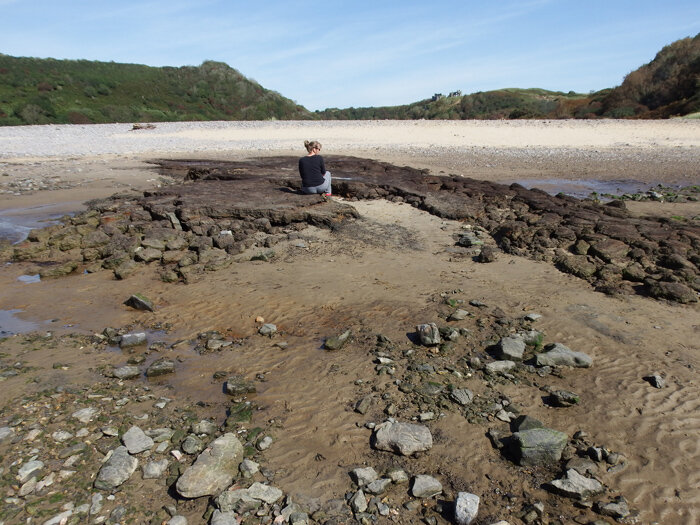
Professional photographer Henry Iddon is passionate about both landscape and the art of photography. His incredible work reflects a deep sense of place which reaches far beyond aesthetic beauty. Telling of that which is no longer visible, of happenings and times past engrained and indelible, Henry’s work transcends the purely visual to stir something deep within.

I first met Henry about sixteen years ago at Kendal Mountain Film Festival. I was exhibiting paintings and he was official festival photographer. A love for the environment has endured for us both in the development of our work since, and I have grown to value, like Henry, the significance of encounter over recognition. Art’s importance lies in being effective/affective beyond the cultural object that it is.

Watch Henry at work, talking to the BBC Adventure Show:

https://henryiddon.com/BBC-Adventure-Show-Interview

rowanhuntley-henryIddon1.png
 

the sense of touch

Using locally found materials allows me to link not only to the physical landscape but to the latent energies embedded within it. Such connections transcend the actual, inviting exploration of the space between that which appears in existence now (the visible), and that which does not (the invisible).

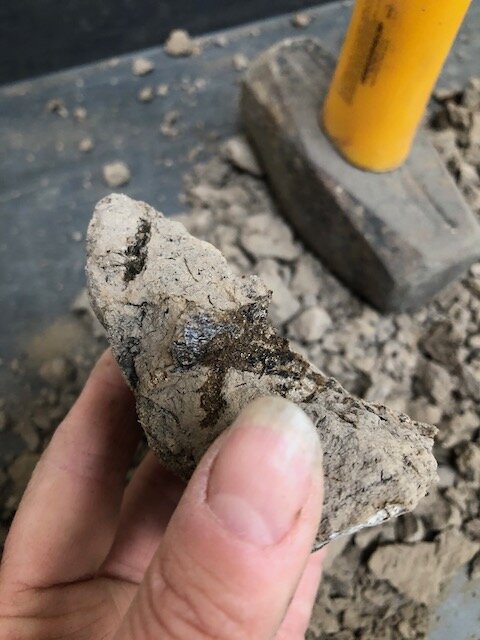
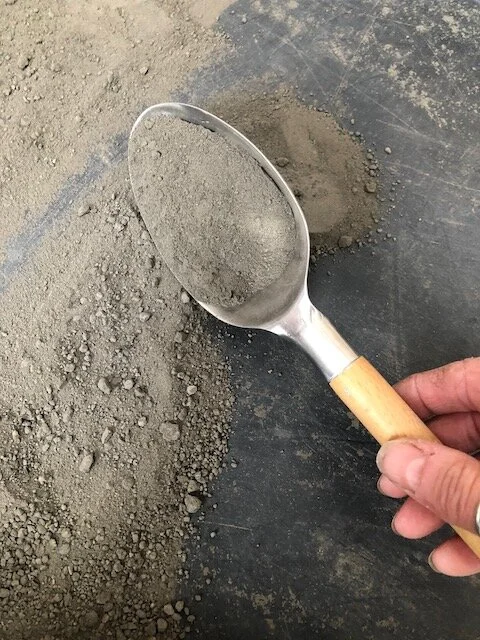
And so, being mindful to collect things from any environment with respect (and permission, if needed), I gather small amounts of pebble, rock, organics, sand and clay. Combining these with manufactured clays, minerals and compounds identified while researching Jo’s work, gives me wide and exciting scope for experimentation in their blending.

Material preparation such as crushing, sieving, dissolving etc. engenders intimate contact between inanimate matter and sentient human. Much can be conveyed through the sense of touch, so I greatly enjoy this tactile interaction. It lets me build greater understanding and closeness, not just with the physical material but with its very being; the chemistry, geology, biology and history of its existence.

Subsequently, enabling change to occur within such matter by exposure to great heat or intense cold allows those materials to be, and to become, what they will. As a result, rather than fostering recognisable outcomes and technical precision in my making, for the moment I’m concerned primarily with the orchestration of happenings. Or, as I prefer to call it, permitting serendipitous alchemy!

rowanhuntley-clayprep1.jpeg
rowanhuntley-clayprep2.jpeg
rowanhuntley-clayprep3.jpeg
rowanhuntley-clayprep4.jpeg

Preparation of clay takes time……. but gives time too:

 
slowly hand-sifting slaked clay is a time for peaceful contemplation.
rowanhuntley-clayball1.jpeg
 

a shiny new addition to the studio this month!

rowanhuntley-kiln1.jpeg

It may be tiny but this kiln is packed with potential and I am excited to see what it will do. My approach is not that of ceramicist but rather of artist who happens to use extremes of temperature in order to explore and create.

Investigating the physical transformation of materials using kiln, freezer and blow torch places me in direct contact with substance, history, science and great creative possibilities. It enables me to echo, metaphorically, the physical essence of Jo’s scientific research and to examine, in a contemporary way, its connections with both industrial south Wales and the ancient geology of Gower. I reflect evolutionary process and effect chemical change to bring tangibility to the invisible and tensions therein. By merging creativity, geology and chemistry and warmly embracing the occurrence of chance, I give rise to random outcomes which mirror those within the natural world.

tiny but significant

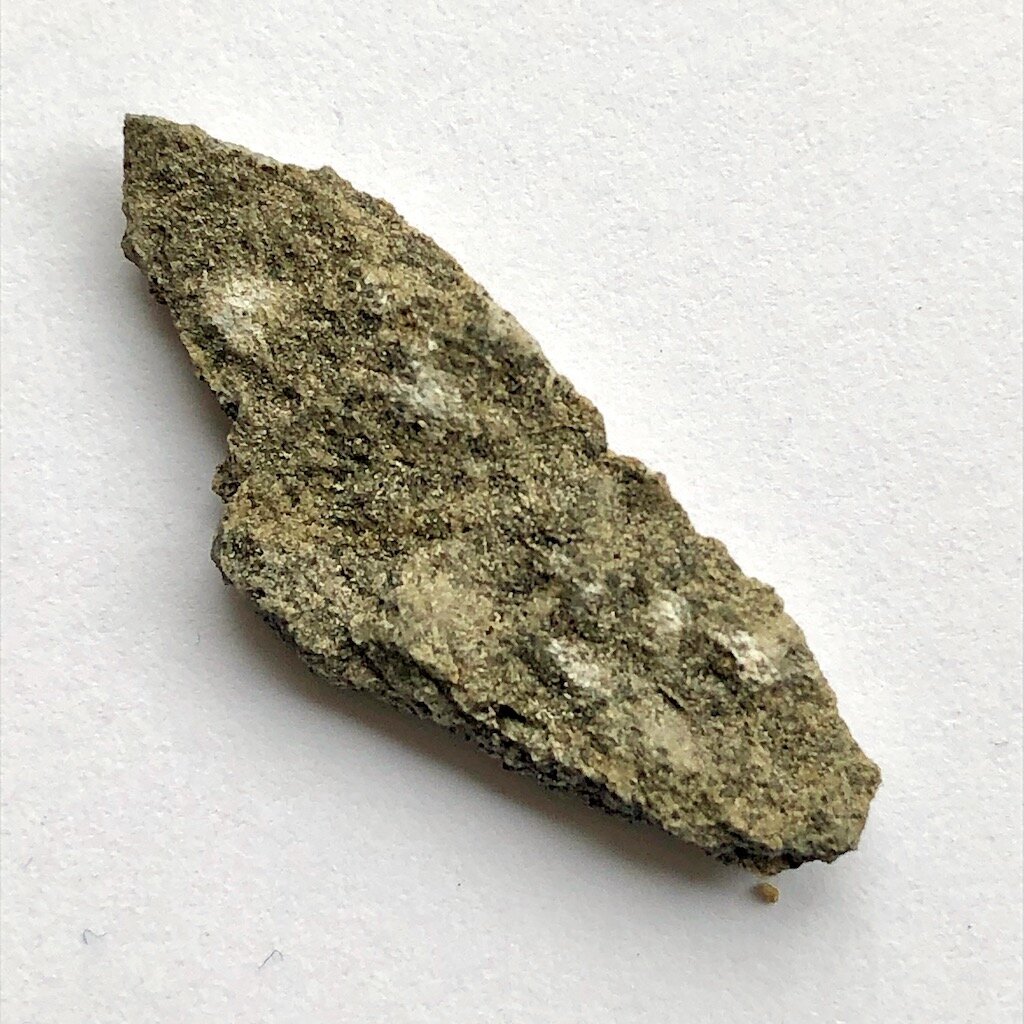
A small envelope holding something precious arrived for me this week! It contained this tiny but very significant piece of Basalt rock retrieved from World’s End Bluff in West Antarctica.

rowanhuntley-basaltsample1.jpeg
rowanhuntley-basaltsample1a.jpeg

The sliver of stone is a remnant from one of Jo’s valuable geology samples, which she collected herself during the 2019 field season for the International Thwaites Glacier Collaboration.

jjohnson-worldsendbluff.png
jjohnson-tweet-worldsendbluff.png

This photo shows the remoteness of World’s End Bluff, a Nunatak in a sea of ice amid the Hudson Mountains - just wow! There is no doubt that undertaking work in such extreme environments takes a special commitment, determination and resilience. I have great respect for all those involved.

I’m excited at the possibilities for using this authentic basalt specimen in my artwork in a metaphorical way. I am hugely grateful for the chance to include it. Diminutive yes but it bears enormous relevance all the same!

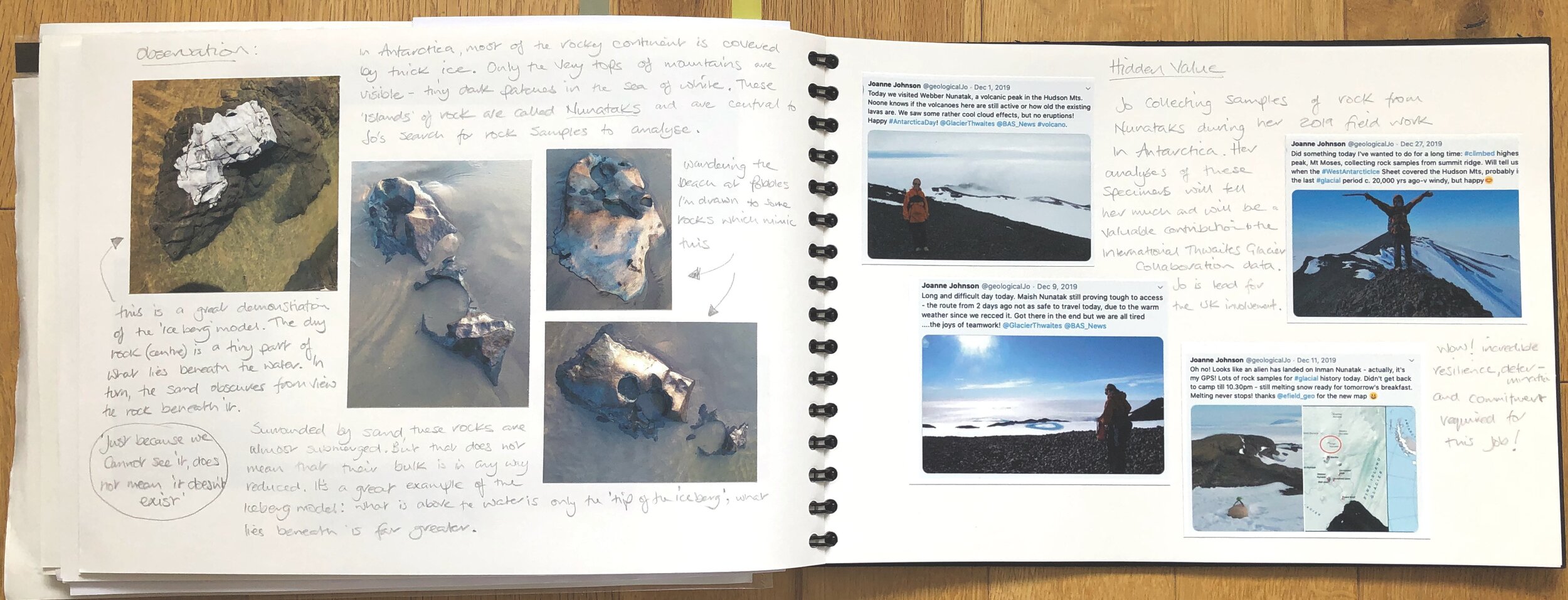
notes on nunataks

rowanhuntley-nunataknotes.jpeg

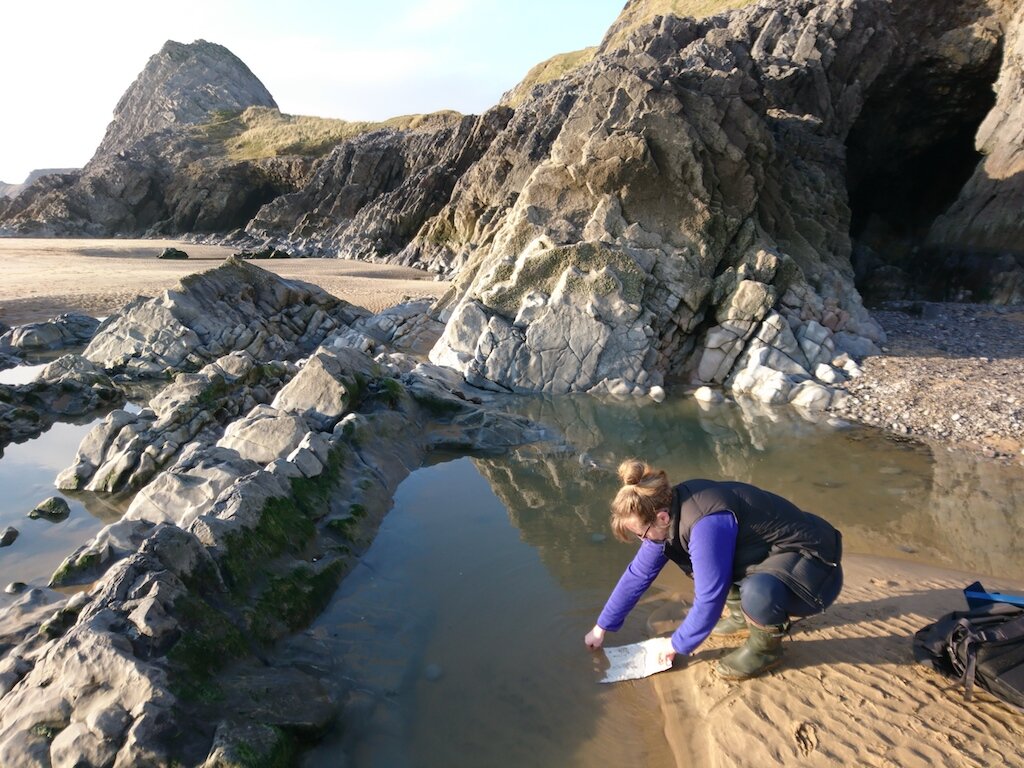
Nunataks are the very tops of mountains which poke through vast fields of inland snow and ice and are otherwise completely engulfed. This page from my notebook details my observations from a walk on the beach which demonstrate the concept of nunataks brilliantly - but on a tiny scale, with sand and sea instead of snow and ice. It’s the same principle!

in the studio

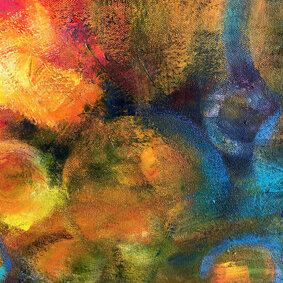
Exploring physical chemistry through paint: using colour and movement to envisage reactionary processes which take place at an atomic level. They form key components central to Jo’s analytical work.

 
rowanhuntley-studio-painting2.jpg

Evidence still exists of reactions that occurred hundreds, often thousands of years ago within the Antarctic rock sought for analysis by Jo. I find that astonishing.

rowanhuntley-paint2-3.jpg
rowanhuntley-paint2-2.jpg
rowanhuntley-paint2-4.jpg
rowanhuntley-paint2-1.jpg

hidden depths

Surrounded by craggy cliffs at Pobbles bay it’s easy to become absorbed in the visual appeal of such a place. But I’m also excited by what I can’t see; the phenomenal wealth of information locked away inside the rocks. Ever present yet hidden, the material within speaks of so much. The world’s geological record is an actual account of earth’s evolution and provides an extensive library there for the reading. It yields a huge knowledge base of physical and chemical happenings which can be examined, assessed, counted and calculated. Its reading and analysis involves disciplines across the scientific spectrum and, with the rapid advancement of scientific knowledge and research, unlocking our past is now helping us with predicting the future. I find this utterly amazing! It is incredible that today, by joining forces and collaborating, climate scientists like Jo from all over the world can piece together intricate pictures of what happened previously, when, where, why and by how much. By utilising our increasing technological capabilities and continuing to access our geological record we are expanding exponentially and in ground breaking ways, our understanding of what was and of what might be. The more we uncover the more we seek to uncover; the more we learn, the more we can learn. It’s a truly fascinating, self-perpetuating circle of enlightenment that is of tremendous value to us all - even if some of us don’t know it.

rowanhuntley-draw-pobblesstrata.jpg

This provides me with huge scope for my creative explorations of the relationship between absence and presence. It enables me to examine and to challenge, in a multitude of ways, their perceived hierarchical ranking. Much to do with Jo’s work goes unseen by the naked eye yet is of prodigious significance and has global relevance. As a geochemist with British Antarctic Survey she works at the forefront of international climate science, making an invaluable contribution to the research around potential sea level rise. Jo looks for, retrieves, analyses, assimilates, translates and presents information found in her geological specimens. Sometimes these are samples from rock which is itself hidden, like those from the bedrock concealed beneath vast West Antarctic ice sheets. Jo’s work is a true example of the immense importance of ‘the invisible in the visual’ (J F Lyotard).

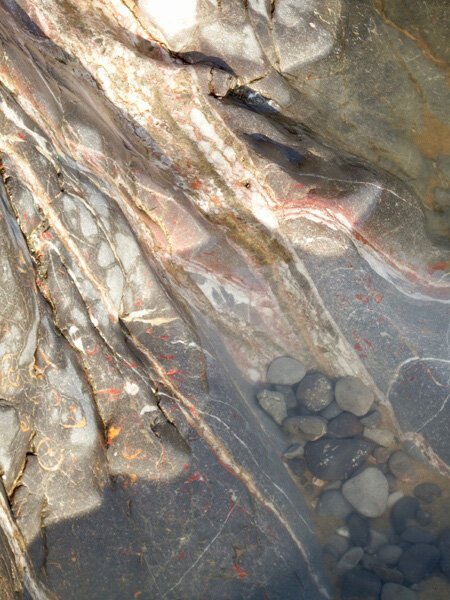
Like pages in a book, these layers of sedimentary rock at Pobbles tell incredible stories. Of dynamic creation and evolutionary change, chemistry, biology, physics and geography, the evidence is there, preserved in stone.

Like pages in a book, these layers of sedimentary rock at Pobbles tell incredible stories. Of dynamic creation and evolutionary change, chemistry, biology, physics and geography, the evidence is there, preserved in stone.

moments in time

Time is an intriguing concept to work with, creatively speaking, although it is a vast and complex area to explore. It poses challenging questions and is difficult to articulate but I remind myself that the only limiting factor in its expression is me…..

‘Moments in Time’ is a geological and experiential record of Three Cliffs Bay.

in contact with the glaciomarine sediment

in contact with the glaciomarine sediment

touched by Patella beach of the Eemian

touched by Patella beach of the Eemian

carrying imprints

carrying imprints

dried traces of a past I didn’t know

dried traces of a past I didn’t know

immersed in the same sea it knew

immersed in the same sea it knew

 
layered with ancient sand in the present

layered with ancient sand in the present

‘Moments in Time’,  a past embodied. Sand, sea and glaciomarine sediment, paper.

‘Moments in Time’, a past embodied. Sand, sea and glacio-fluvial sediment, paper.


contemplating time

Time - evolutionary, geological, anthropogenic. Vast, yet often imperceptible, it can pass in a flash or seem to go on forever.

Our perception of time varies hugely depending on our state of mind and circumstance. Consequently, during these unprecedented, challenging days of lockdown, it is polarising. To some, such a situation is intolerable, yet to others it engenders a freedom rarely experienced.

Read More

prediction?

rowanhuntley-rhossili1.jpg

Drawing at Rhossili, sitting above a 125,000 year old limpet shell….

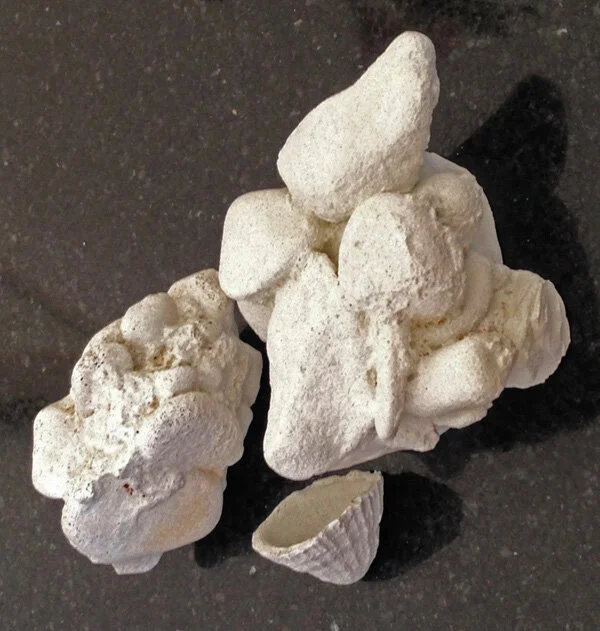
Embedded within a remnant of the ‘Patella’ beach to which it lends its name, the shell is held fast by ‘natural cement’ (precipitated limestone / calcium carbonate). This raised beach fragment is a relic from earth’s last warm period (interglacial) when the sea level was much higher than today - but temperatures were almost the same. A probable indicator of what is to come, perhaps in the next few hundred years, should global CO2 levels not fall below current levels.

rowanhuntley-rhossili-patella1.jpg

revelation

Stormy seas and turbulent winds frequently strip sand from around Gower’s coast. Winter storms exacerbate a constant cycle of wearing away and putting back, allowing buried rock to be unmasked for a short while before being engulfed by sand once more.

rowanhuntley-pobbles-sandloss1.jpg
rowanhuntley-pobbles-sandloss2.jpg

Barnacle-free and pale in colour this ‘clean’ rock stands out from that which sits above it. Such exposure provides much to explore and a brief opportunity to connect momentarily with unusual and intriguing finds….

rowanhuntley-redspiral.jpg
rowanhuntley-yellowspiral1.jpg

These fossil shells embedded in the limestone at Pobbles bay, probably coloured by iron, look remarkably like cave paintings.

 
rowanhuntley-spirals-pebbles.jpg
 

what lies beneath?

To look under our feet is to glimpse past and future, entwined in stories of creation and time, readable in the present. Uncovering this richly woven tapestry of dynamic tales concealed behind its recognisable facade, provides intriguing insight into the static scenery we think we know.

Read More